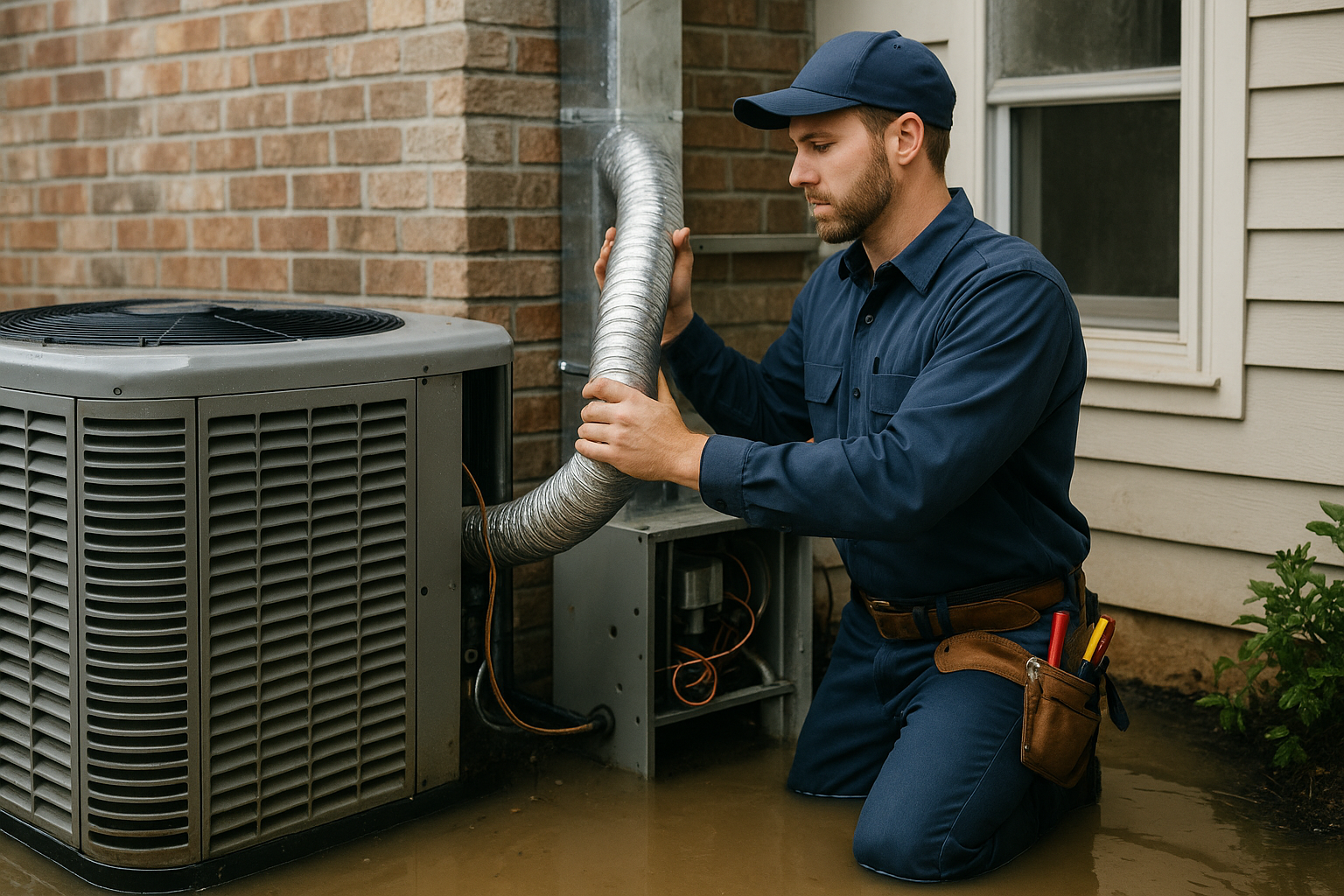
What are signs my ductwork needs repair after Charleston flooding damage
After flooding in Charleston, key signs your ductwork needs repair include musty or moldy odors, significantly reduced airflow from vents, visible water stains or rust on ductwork, unusual sounds when the HVAC system runs, and higher than normal energy bills indicating system inefficiency.
Immediate Visual Signs of Flood-Damaged Ductwork
The most obvious indicators of ductwork repair charleston flooding damage appear as physical changes to your duct system. Look for water stains, rust, or corrosion on visible ductwork in basements, crawl spaces, or attics. Metal ducts may show orange or brown rust spots, while flex ducts might appear discolored or saggy from water absorption.
Insulation around ducts often becomes compressed, discolored, or falls away after flood exposure. In areas like West Ashley and James Island, where flooding can be particularly severe, homeowners frequently discover that their ductwork insulation has become waterlogged and needs complete replacement.
Air Quality and Odor Problems
Flooding creates ideal conditions for mold and mildew growth within ductwork systems. If you notice musty, earthy, or sour odors coming from your vents, this often indicates microbial growth inside the ducts. These contaminants can spread throughout your home every time the HVAC system operates.
Poor indoor air quality following flooding may also manifest as increased allergy symptoms, respiratory irritation, or a general stuffiness in the air. Charleston's naturally high humidity levels can exacerbate these problems, making professional ductwork inspection essential after any flooding event.
Performance Issues and Airflow Problems
Flood-damaged ductwork often develops leaks, separations, or blockages that dramatically reduce system efficiency. You might notice certain rooms receiving little to no airflow, while others seem to work normally. Uneven temperatures throughout your home can indicate that water damage has compromised duct connections or caused sections to collapse.
Higher energy bills without increased usage often signal that your HVAC system is working harder to compensate for ductwork repair charleston flooding damage. When ducts leak conditioned air into unconditioned spaces, your system runs longer cycles to maintain desired temperatures.
Unusual Sounds and System Behavior
Water-damaged ductwork frequently produces new or different sounds when the system operates. Whistling, rattling, or banging noises may indicate loose connections, debris in the ducts, or structural damage from flood pressure. These sounds often worsen over time as damaged components continue to deteriorate.
Your HVAC system might also cycle on and off more frequently than normal, struggle to reach set temperatures, or produce weak airflow even when running at full capacity. In Downtown Charleston and Mount Pleasant areas, where older homes may have more vulnerable ductwork, these performance issues often appear within days of flooding.
When to Call Professional Help
Given Charleston's climate challenges and frequent flooding risks, professional ductwork inspection should occur within 48-72 hours of any significant water intrusion. Certified HVAC technicians can assess damage that isn't visible to homeowners and prevent long-term problems like mold growth or system failure.
Professional repair costs for ductwork repair charleston flooding damage typically range from $1,500 to $5,000, depending on the extent of damage and accessibility of affected areas. However, addressing issues promptly often prevents more expensive whole-system replacements later.
Remember that insurance claims for flood-damaged HVAC systems often require professional documentation of damage and repair needs. Working with qualified local contractors ensures proper assessment and helps support any insurance claims you may need to file.
Frequently Asked Questions
- How quickly should I inspect ductwork after Charleston flooding?
- Inspect ductwork within 24-48 hours of flooding. Mold can begin growing within 48-72 hours in Charleston's humid climate, making early detection crucial for preventing extensive damage.
- Can I clean flood-damaged ductwork myself?
- Minor surface cleaning is possible, but professional assessment is recommended. Hidden damage, mold growth, and structural issues require specialized equipment and expertise to address safely.
- What's the average cost for ductwork repair after flooding in Charleston?
- Ductwork repair costs typically range from $1,500 to $5,000 depending on damage extent. Complete replacement may cost $3,000 to $8,000 for average Charleston homes.
- Does homeowners insurance cover flood-damaged ductwork?
- Standard homeowners insurance typically excludes flood damage. Separate flood insurance through NFIP may cover ductwork repairs, but coverage varies by policy and damage cause.
- How long does ductwork repair take after flooding?
- Simple repairs take 1-2 days, while extensive damage requiring replacement can take 3-7 days. Drying time and material availability may extend the timeline in Charleston.
About the author: Matt Fowkes, Founder. Matt Fowkes founded the operator to connect homeowners with vetted local service professionals. He's spent over a decade studying how online directories and matching services work — what makes them trustworthy, what makes them fast, and why most fail homeowners.
More hvac guides for Charleston
Need hvac help in Charleston?
Get matched with a vetted local pro — free, no obligation.