Why Does My Air Conditioner Struggle During Charleston's Humid Summers When Heat Index Exceeds 100 Degrees
When Charleston's heat index soars above 100°F, your air conditioner struggles because humid air requires significantly more energy to cool and dehumidify. The combination of 89°F temperatures with oppressive humidity forces your system to work overtime, often exceeding its designed capacity and leading to inadequate cooling performance.
How Charleston's Extreme Humidity Affects AC Performance
Charleston's notorious summer humidity creates a perfect storm for air conditioning challenges. When outdoor humidity levels reach 80-90%, your AC unit must remove moisture from the air before it can effectively lower temperatures. This dual workload - cooling and dehumidifying - puts enormous strain on your system.
The heat index calculation factors in both temperature and humidity, which is why a 89°F day in Charleston can feel like 105°F or higher. Your air conditioner struggles charleston humidity because it's designed for specific load calculations that extreme conditions can overwhelm.
Signs Your AC Is Struggling With High Heat Index
- Indoor temperatures consistently 3-5 degrees above thermostat setting
- System runs continuously without cycling off
- Excessive moisture or condensation around vents
- Higher than normal electricity bills
- Uneven cooling between rooms
Why Standard AC Units Aren't Built for Extreme Conditions
Most residential air conditioning systems are sized for typical summer conditions, not the extreme heat index days that plague areas like Mount Pleasant and West Ashley. When humidity combines with high temperatures, the effective cooling load can increase by 20-30% beyond normal capacity.
Your air conditioner struggles charleston humidity because the evaporator coil becomes overwhelmed trying to condense moisture while simultaneously cooling air. This creates a bottleneck that reduces overall system efficiency and comfort.
The Science Behind Humidity and Cooling
High humidity air holds more heat energy than dry air at the same temperature. When your AC processes humid air, it must first remove moisture through condensation on the evaporator coils. This process generates additional heat that the system must then overcome, creating a cycle where your air conditioner struggles charleston humidity more than dry heat.
Solutions to Improve AC Performance in High Humidity
Professional HVAC contractors can implement several strategies to help your system handle Charleston's brutal summers more effectively. Upgrading to a variable-speed system allows for better humidity control and more consistent temperatures.
Adding supplemental dehumidification can significantly reduce the load on your primary cooling system. Many homes in James Island and Summerville benefit from whole-house dehumidifiers that work alongside existing AC units.
Maintenance Steps That Make a Difference
- Replace air filters monthly during peak summer
- Clean evaporator and condenser coils regularly
- Ensure proper refrigerant levels
- Seal ductwork to prevent humid air infiltration
- Install programmable thermostats with humidity controls
When to Call Professional HVAC Help
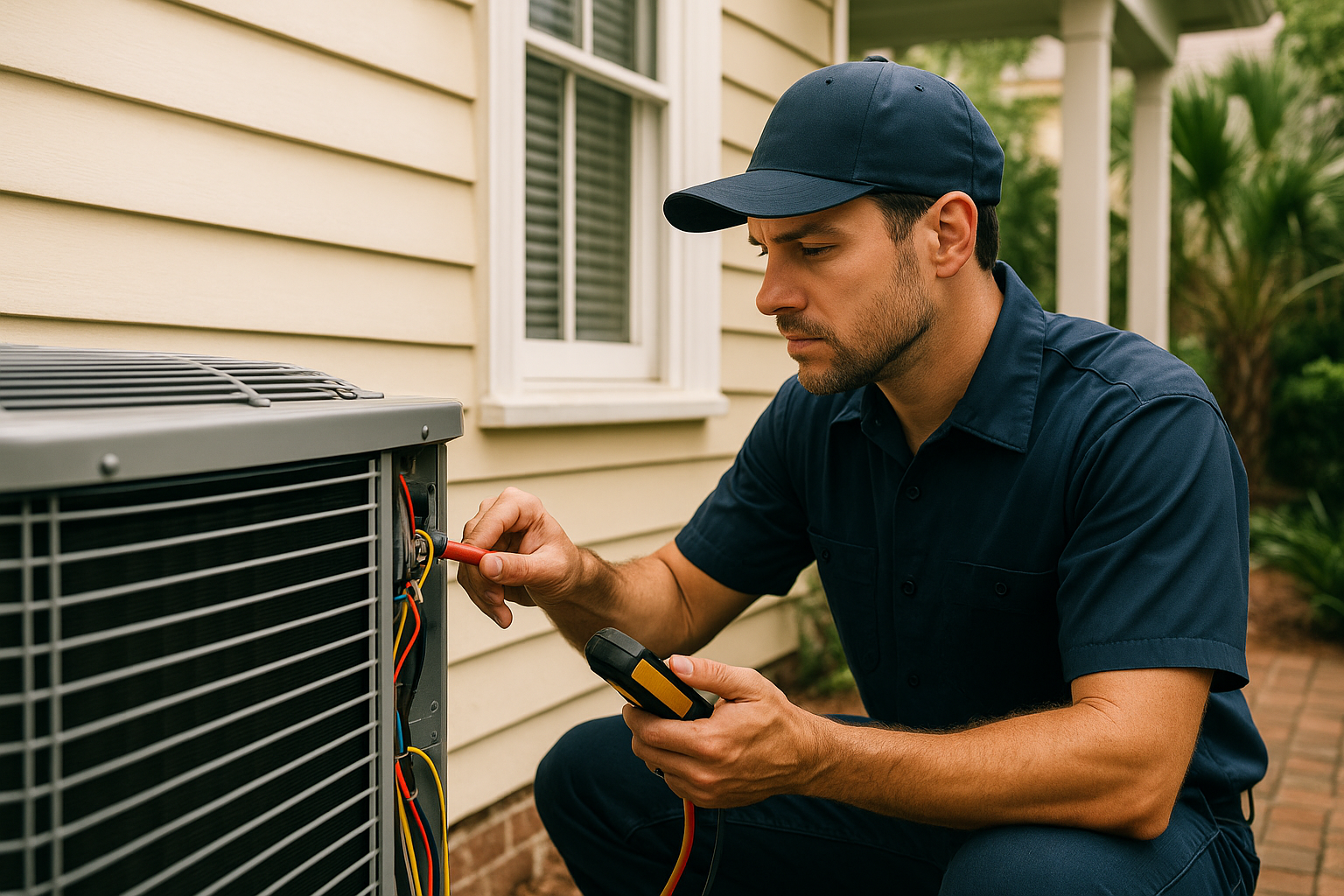
If your air conditioner struggles charleston humidity despite basic maintenance, it's time for professional evaluation. Experienced technicians can assess whether your system is properly sized for Charleston's climate demands and recommend upgrades or modifications.
Don't wait until your system fails completely during a heat wave. Proactive maintenance and system optimization can prevent costly breakdowns when you need cooling most. Professional HVAC services can also evaluate your home's insulation and air sealing to reduce the overall cooling load.
Charleston Hvac Specialists connects homeowners with qualified local professionals who understand the unique challenges of cooling homes in our humid coastal climate. Getting expert help ensures your air conditioner can handle whatever Charleston's summers throw at it.
Frequently Asked Questions
- Why does my AC run constantly when the heat index is over 100°F?
- High humidity forces your AC to work harder removing moisture while cooling, often exceeding the system's designed capacity and preventing normal cycling.
- Can adding a dehumidifier help my struggling air conditioner?
- Yes, whole-house dehumidifiers reduce the moisture load on your AC, allowing it to cool more efficiently during humid Charleston summers.
- Is my AC unit too small for Charleston's humid climate?
- Many standard AC units are sized for typical conditions, not extreme humidity. Professional load calculations can determine if upgrading is necessary.
- How often should I change AC filters during humid summer months?
- Replace filters monthly during peak summer in Charleston, as high humidity and continuous operation cause filters to clog faster.
- What temperature should I set my thermostat during extreme heat index days?
- Set your thermostat 3-5 degrees higher than normal during extreme conditions to prevent system overload while maintaining reasonable comfort levels.
About the author: Matt Fowkes, Founder. Matt Fowkes founded the operator to connect homeowners with vetted local service professionals. He's spent over a decade studying how online directories and matching services work — what makes them trustworthy, what makes them fast, and why most fail homeowners.
More hvac guides for Charleston
Need hvac help in Charleston?
Get matched with a vetted local pro — free, no obligation.